
The population of house sparrows in Broken Hill, New South Wales, are exposed to high levels of lead (Pb) in the environment, as a result of contamination from mining activity in the city. Over the past five years we have been looking at the effects of this lead on the population of sparrows. In a recently published paper by Dr Janet Chik, we examined the effects of lead on anti-predator behaviour and performance.
In our new study (here), we have used the gaze sensitivity test to demonstrate that sparrows with high levels of lead in their blood, are more risk averse than those in less contaminated parts of the city. The gaze sensitivity test works because sparrows have lived alongside people for thousands of years. Normally people ignore them, but sparrows have learned that when people fix their gaze on them, that normally signals danger. In the experiment we presented one of the three images below, to sparrows visiting a feeding station. When the picture of the man was looking straight at the birds, sparrows took longer to visit the feeder than when the man in the picture was looking sideways, similar to results seen previously in other urban birds like seagulls in Europe. However this result was only found in the birds that were contaminated with lead.
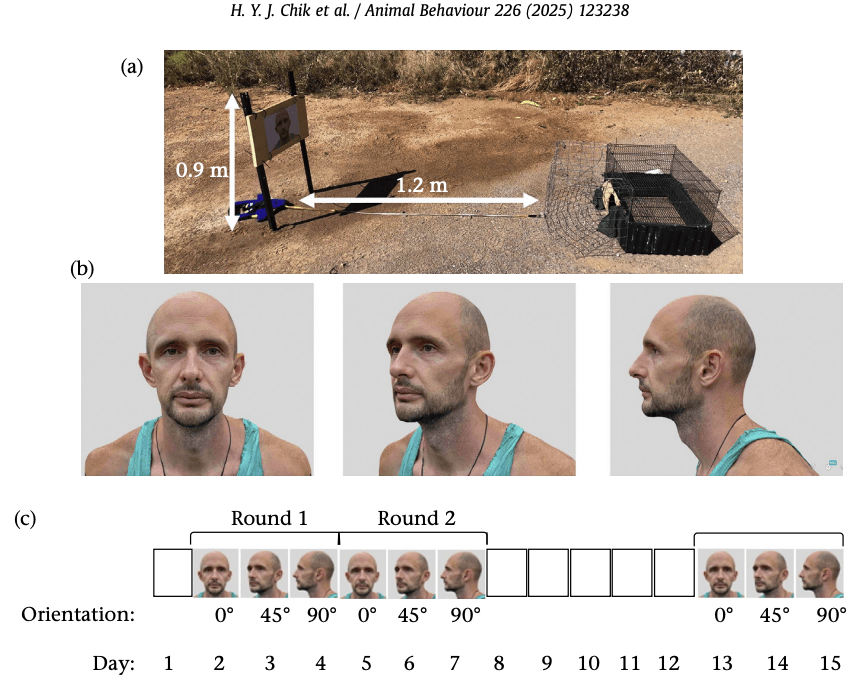
This finding suggests that these birds were more vulnerable to predators, and therefore were more cautious. It is cool, but perhaps not surprising to see how sensitive sparrows are to the gaze of a person. That has come from adapting to the threat posed by people in the thousands of years that house sparrows have lived alongside people.
In a second experiment we tested vulnerability to predation by measuring the take-off speed of sparrows from different parts of the city. We found that birds from contaminated areas with high levels of lead in their blood, were slower to take-off in experimental trials, over the first metre of an escape flight. This difference could mean life or death when a sparrow is attacked by an ambush predator such as a sparrowhawk, and explains the sensitivity of the sparrows to the gaze of a predator.
This study is important because it demonstrates that the lead (Pb) contamination in the urban area of Broken Hill is adversely affecting the sparrows that live there. Lead is known to affect muscle strength, and cognitive behaviour in many animals. If the lead is affecting the sparrows living closely alongside people in Broken Hill, then it also suggests that the contamination through the city may pose impacts to the health of the people that live in those same areas.
 Griffith Ecology Lab