
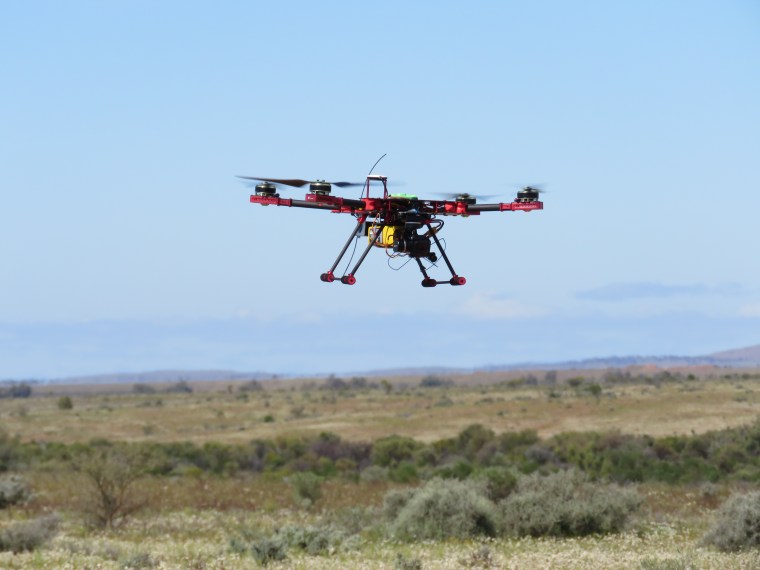
UAV’s or drones are increasingly being used in environmental science, as a great way of gathering imagery and deploying sensors. In mid September, Richard Lucas, from UNSW organised a fantastic meeting, which brought together a range of different UAV’s and sensors for a few days of frenetic data gathering. We were lucky enough to get involved, and helped to set up ‘challenges’ and ground truth some of the data acquired. The data that has now been gathered in Lake Paddock (the central area for the chestnut-crowned babbler project), and Gap Hill (the key area for our work on zebra finches), will provide excellent insight into the link between landscape, vegetation and avian ecology, once it is all processed and analysed.

 Sam is currently in Norway working with the house sparrow genetics group in Trondheim to look at SNP data from the Australian sparrows. During his trip, he is being hosted by Glenn-Peter Saetre in Oslo and Henrik Jensen at NTNU in Trondheim. This molecular work should provide a high level of coverage for population genetics and history and hopefully also for looking at selection across the different Australian climates.
 Sam’s first sparrow paper has just been published in the open access journal Avian Research, which means that it’s freely available



 Griffith Ecology Lab